No ‘Best’ Media Operating Model as Global Advertisers Split Across Four Distinct Approaches
Multinationals are not all converging on a single media operating model and brands split between four archetypes, according to new research from WFA and mediasense.
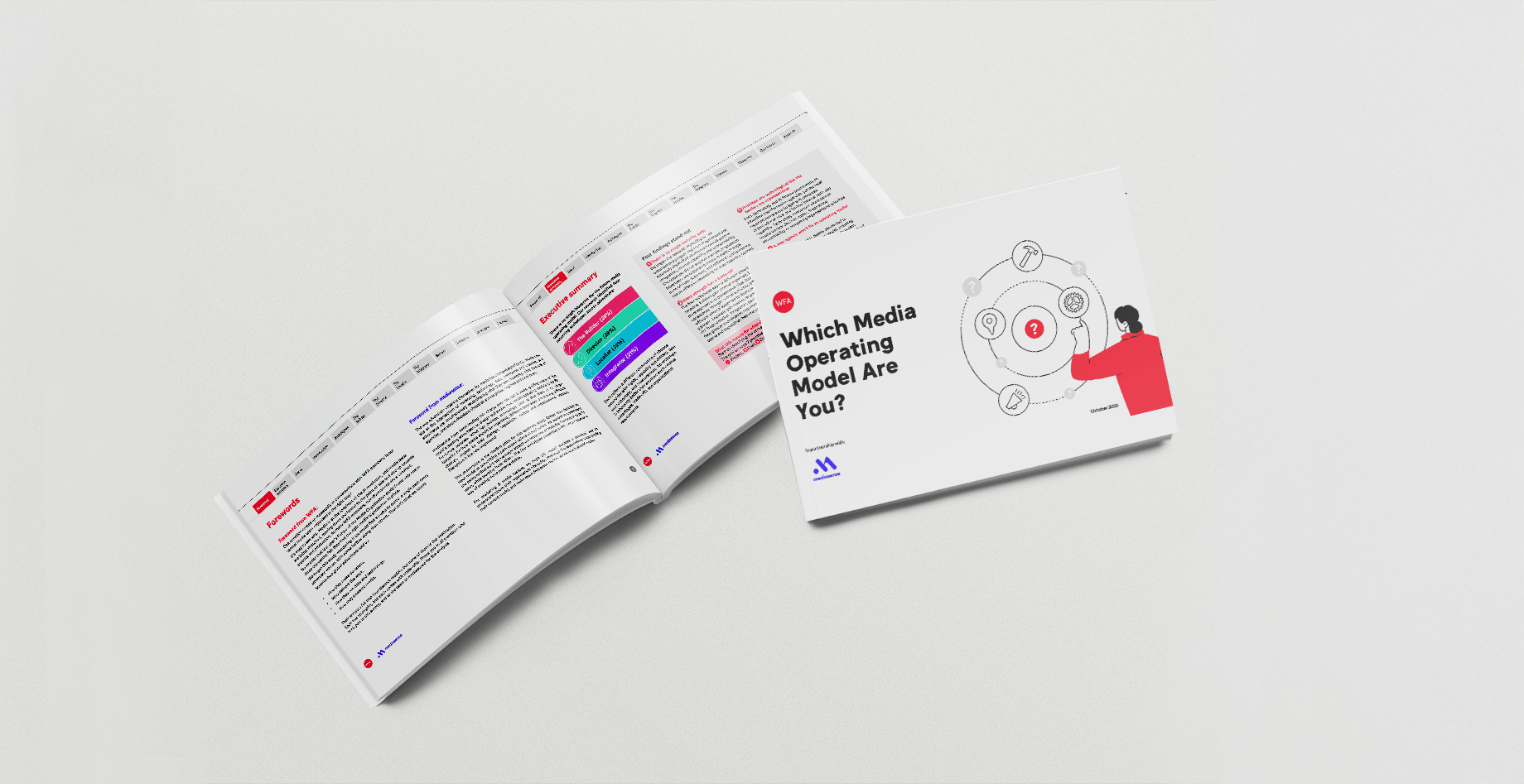
Global advertisers are not converging on a single ‘mature’ media operating model, despite years of centralisation, in-housing and integration across the industry, according to new research from WFA and mediasense.
The study of 72 global advertisers, representing a cumulative $90bn in annual global advertising spend, began by testing whether organisations were moving towards a common model built around greater integration, internal capability and central control. Instead, it identified four distinct approaches, with none emerging as an inherently better or more advanced model.
Which Operating Model Are You? challenges the idea that media transformation has a single destination. Rather, advertisers are making different choices around who owns media capability, where decisions sit, the role of agencies, and how data, technology and measurement are organised, with each configuration creating its own advantages and trade-offs.
- Builder (28%): prioritises internal capability and ownership but can struggle to connect that capability across the wider organisation.
- Director (28%): concentrates authority at the centre while relying heavily on agencies for delivery, placing a premium on the expertise of the central team.
- Localist (22%): gives markets greater autonomy and responsiveness, at the risk of fragmentation across data, technology and measurement.
- Integrator (21%): connects teams, partners and infrastructure more closely, but faces greater coordination demands as the model becomes more interconnected.
“For media leaders, the task is not to move towards someone else’s model. It is to make their own work better. Media directors need to understand what is worth protecting, where the biggest constraints sit, and what needs to change. The four models identified in this report provide a practical way to start that conversation,” said Tom Ashby, Global Lead, Media Services at WFA.
Despite these four different approaches, looking ahead most advertisers share similar transformation priorities. Two-thirds (67%) prioritise data, technology and AI, while 61% are focused on improving measurement against business outcomes.
Each group, however, is on a different development path. Fifty-eight per cent of Directors say they will strengthen centralisation further, 53% of Localists say they are reconsidering the balance of central and local responsibilities, 64% of Integrators are prioritising integration of media with creative and production, and 21% of Integrators are considering greater decentralisation or specialisation.
Across the study, the biggest barriers are organisational: budget and resources (60%), organisational silos (56%) and limited internal skills and capability (44%). Only 15% identify limitations of the agency model as a barrier. The report warns that changing agency arrangements without addressing internal capability, decision rights, data access and governance risks carrying the same constraints into a new model. In short, a new agency won’t fix an operating model problem.
“What matters is how well the model works as a whole and how decision rights, internal capability, agency roles, data and technology, and measurement are interconnected,” said Jack Shearring, Vice President, Client Strategy at mediasense. “All this also becomes more important as advertisers respond to AI, new technology and greater integration between media and adjacent disciplines. Many of the barriers highlighted by this research remain organisational: resources, silos, skills, decision rights and accountability.”
WFA members can download the report here.
Get access to the thinking that shapes tomorrow’s marketing
Up next
The New Paradigm for Agencies
As technology, AI and client needs evolve, the traditional agency model is being challenged. Ryan Kangisser explores what this means for marketer-agency relationships and the capabilities that will matter most in the future.
Marketing Governance Needs to Be About Growth
mediasense CEO Sam Tomlinson argues that governance should provide a framework for aligning and optimising marketing operations and investment against the wider strategic goals of the business.
Creator Marketing Governance in Indonesia with IDN
As Indonesia’s creator economy continues to grow, brands are looking beyond campaign delivery to build stronger governance, institutional memory and creator marketing performance.