Cannes Lions 2026: Two Key Conversations Shaping Marketing’s AI-Enabled Future
How will AI reshape marketing's future? Two Cannes Lions discussions explored the implications for talent, agency models and value creation.
Among a busy Cannes Lions 2026 agenda, mediasense participated in two panel discussions exploring how AI is reshaping the marketing industry.
While one conversation focused on the future skills, capabilities and cultures organisations will need to thrive, the other examined how evolving agency models are driving a shift towards outcome-based remuneration. Held in partnership with WFA and Meta respectively, both sessions highlighted a common theme: AI is not simply changing how work gets done – it’s prompting a broader rethink of how marketing organisations create, reward and measure value.
The Future of Marketing Talent
AI is changing how marketers work, but not necessarily what makes them valuable.
Hosted in partnership with WFA and moderated by mediasense’s Ryan Kangisser, the panel brought together leaders from Unilever, Coca-Cola and Amazon to discuss how organisations are adapting their talent strategies for an AI-enabled future.
A recurring theme was that the greatest challenge facing marketing teams is not a shortage of talent, but the scale of organisational change required to fully embrace AI. As Unilever’s Isabel Massey observed, “we don’t have a talent crisis – we have more of a business transformation crisis.”
Across the discussion, three key themes emerged:
- Human judgement matters more than ever
- AI should amplify expertise, not replace it
- Culture enables transformation
Ultimately, the panel struck an optimistic tone. While AI will inevitably reshape the industry, the future belongs to marketers who combine technological fluency with human creativity, curiosity and judgement. As Claudia Navarro of Coca-Cola put it:
“AI wouldn’t necessarily replace people. AI will replace people that don’t use AI.”
Impact Over Input: The Shift to Outcome-Based Remuneration
If AI is changing how agencies work, it is also changing how agencies should be rewarded.
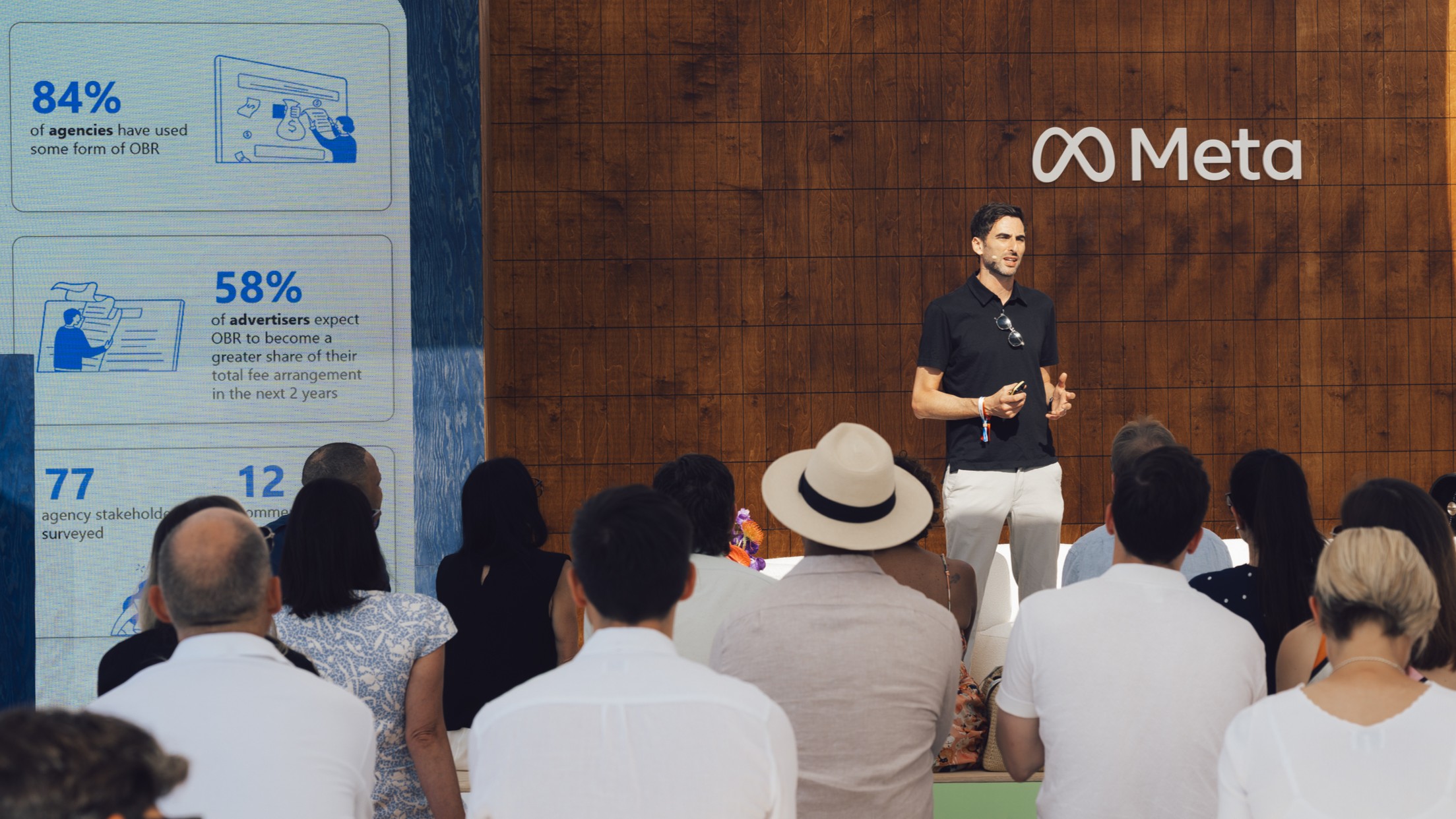
At a session hosted by Meta, Ryan Kangisser joined industry leaders from Meta, L’Oréal, Farmer & Company and TubeScience to discuss findings from a new mediasense, Meta and WFA study exploring the future of agency remuneration.
The research revealed growing momentum behind outcome-based remuneration, with 85% of agency leaders expecting its use to increase over the next two years. Yet despite broad support from both agencies and advertisers, traditional time-based remuneration models continue to dominate.
Three key points emerged from the discussion:
- Reward business outcomes, not simply activity
- Build trust through meaningful measurement
- Start small, learn and scale
Overall, the discussion reinforced that outcome-based remuneration is about much more than pricing. As Ryan noted:
“It’s a partnership model, not a payment model.”
The panel explored how outcome-based approaches can help reset and recalibrate how agencies add value and how clients recognise that value, creating stronger alignment around business outcomes rather than simply measuring inputs.
Looking Ahead
Although the panels explored different challenges, both arrived at a similar conclusion: AI is accelerating change across the marketing ecosystem, but technology alone is not the answer. Whether building future-ready marketing teams or redefining agency remuneration, success will depend on organisations creating the right culture, incentives and partnerships to unlock value in an AI-enabled world.
Get access to the thinking that shapes tomorrow’s marketing
Up next
Creator Marketing Governance in Indonesia with IDN
As Indonesia’s creator economy continues to grow, brands are looking beyond campaign delivery to build stronger governance, institutional memory and creator marketing performance.
IAB UK’s HY 2026 Digital Adspend Report Launches
The report offers insights into the digital advertising market's performance during the first half of the year, with research conducted by mediasense.
ISBA and mediasense report establishes first capability baseline for UK digital retail media networks
New research assesses campaign, reporting and measurement capabilities across five leading UK retail media networks.